The Receipt Nobody Asked For: Breaking Down What It Actually Costs to Be a Fan in 2024
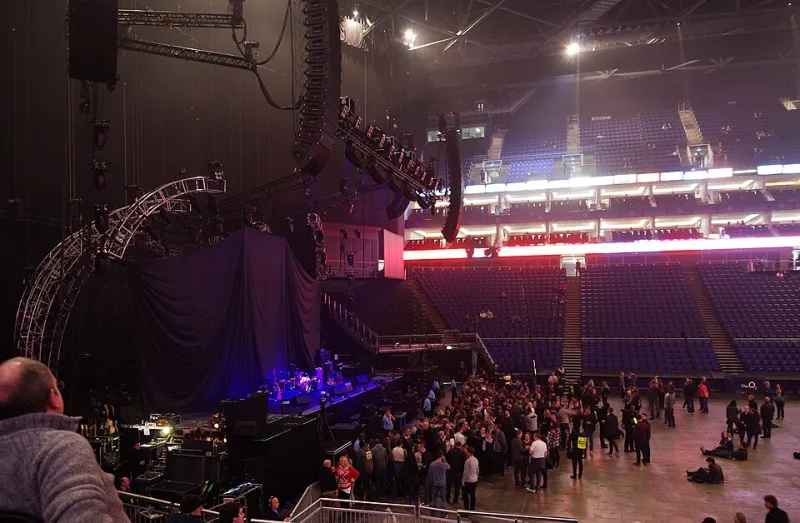
Photo: mattbuck (category), CC BY-SA 4.0, via Wikimedia Commons
Let's just say it out loud: being a music fan in America has turned into a luxury hobby. What used to be a $40 ticket and a gas station snack run is now a small financial event that requires a spreadsheet, a pre-sale code, and maybe a payment plan. So where is all that money actually going? We broke it down.
The Ticket Isn't the Ticket Anymore
Start with the face value — say, $95 for a mid-tier arena show. Sounds reasonable until you hit checkout. Then comes the service fee, the facility fee, the order processing fee, and occasionally a 'platinum' upgrade you didn't ask for, which is just the same seat with dynamic pricing baked in. By the time you're done, that $95 ticket is pushing $150.
And here's the part that stings: the artist often sees less of that markup than you'd think. A chunk of the fees goes to the ticketing platform, the venue, and sometimes the promoter. Dynamic pricing — the same surge model that wrecks your Uber ride home — was pitched as a way to fight scalpers. In practice, it mostly just means fans pay scalper prices to the platform instead.
The $75 T-Shirt Is Doing the Heavy Lifting
Here's a fact that surprises people: for most mid-level touring artists, the tour itself barely breaks even. The real money is at the merch table. That's why a screen-printed tee that would cost $25 at a mall boutique runs $60–$75 in an arena concourse.
And venues know it. Exclusive, venue-only drops and 'tonight only' designs create FOMO that turns a casual attendee into a buyer. Some arenas even take a cut of merch sales — sometimes 20–30% — which gets priced right back into that hoodie you're eyeing.
Add it up: parking ($30), a drink ($16), dinner because the show runs late ($40), and a souvenir tee ($65). A one-night outing for two people can easily clear $500 before the encore.
So Who's Actually Cashing In?
Roughly speaking, your ticket dollar splits between the artist and their team, the promoter, the venue, the ticketing platform, and taxes/fees. Superstars with 360 deals capture more of it. Opening acts and crew — the people physically making the show happen — often earn a flat rate that hasn't kept pace with anything.
The frustration isn't that anyone in the chain makes money. It's that the fan has become the flexible line item absorbing every inefficiency in the system.
Fighting Back Without Quitting Fandom
You don't have to swear off live music to protect your wallet:
- Buy from the box office. Many venues sell a limited number of no-fee tickets directly.
- Wait on merch. Official online stores restock post-tour, often at lower prices.
- Go small. A $30 club show from a rising artist is frequently a better night than a $200 nosebleed seat.
- Split the extras. Carpool, eat before, skip the $16 beer. The music's the same.
- Know the refund rules. Some platforms now cap cancellations and disclose all-in pricing up front — use that transparency.
Fandom shouldn't require a line of credit. The fans who show up night after night are the entire engine of the live business — and it's about time the math reflected that.