Dead Before Drop Day: The Untold Reasons Celebrity Collabs Get Quietly Buried
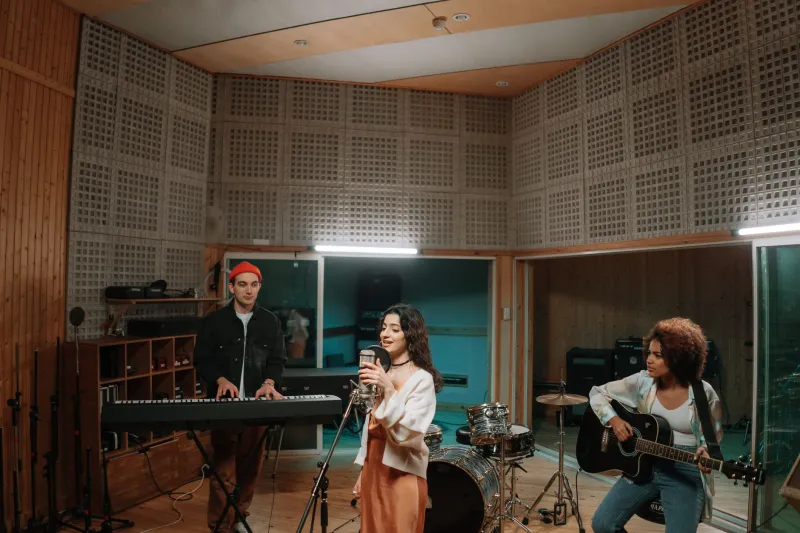
You've been there. Two of your favorite artists follow each other on Instagram, someone posts a studio selfie with a fire emoji, and Twitter absolutely loses its mind. Fans start designing fake covers. Reddit threads spiral into release date predictions. And then — nothing. Crickets. Maybe a vague non-answer in a press interview six months later, or worse, one of the artists straight-up pretending the whole thing never happened.
Welcome to the graveyard of celebrity collabs: a place packed with potential bangers that never saw the light of day, and a whole lot of stories nobody's officially telling.
The Hype Machine Starts Before Anyone's Even Agreed to Anything
Here's the thing most fans don't realize: a lot of collabs get talked about publicly way before the legal and business side is even close to settled. Artists hype each other up at award shows, shout each other out in interviews, or let a manager drop a casual hint — and suddenly there's an expectation baked in that neither camp fully committed to.
"The public announcement is sometimes the kiss of death," one music industry consultant told us, speaking anonymously because they still work with several major labels. "Once fans know about it, both sides feel pressure. That pressure turns what should be a creative conversation into a negotiation, and negotiations have a way of going sideways fast."
It's a dynamic that plays out constantly in the upper tiers of the music industry, where even a casual studio hang can get misread as a confirmed project. And once the rumor mill starts spinning, both artists are suddenly accountable to an audience that had zero input in the actual creative process.
Contract Clauses Nobody Talks About Out Loud
Let's get into the weeds for a second, because this is where a lot of collabs actually die. When two artists from different labels decide to work together, it's not just a vibe — it's a legal puzzle with a lot of pieces that don't always fit.
Each artist's contract with their label typically includes provisions about who owns what percentage of a collaborative release, which label gets to distribute it, and how the song gets promoted across platforms. When both artists are signed to major labels with competing interests, those conversations can drag on for months. Sometimes one label holds out for a bigger cut. Sometimes there are exclusivity clauses that make a joint release technically impossible without a special carve-out agreement.
"People think artists just go into a studio and make music and it comes out," says a former A&R rep who now works independently. "But when you've got two major label artists, you've got two legal teams, two sets of management, two PR departments, and sometimes two touring schedules that make even scheduling studio time a nightmare. The music is usually the easiest part."
Royalty splits are another quiet killer. If one artist is the bigger commercial draw at the time of recording, their team might push for a larger percentage — and the other side might walk rather than accept what feels like a diminished role in their own collaboration.
When Creative Vision Becomes a Tug of War
Even when the legal side gets sorted, there's still the matter of two artists with established sounds, loyal fanbases, and very specific creative identities trying to make something that works for both of them.
Creative clashes are more common than the industry lets on. One artist might want to push in a direction that feels off-brand for the other. A producer brought in by one camp might not vibe with the other's usual process. Or — and this happens more than you'd think — the finished track just doesn't sound good enough to either artist, and rather than release something mediocre, they quietly agree to let it sit in a hard drive somewhere forever.
What makes this tricky is that neither artist wants to publicly take the blame for a collab falling apart. So instead of a real explanation, you get PR-speak: "We're both really busy right now," or "We're still working on it," said with the kind of smile that translates directly to "please stop asking."
Social Media Speculation Is Getting Disturbingly Accurate
Here's where it gets interesting. While official channels stay tight-lipped, fan communities have gotten genuinely impressive at reverse-engineering what went wrong with a shelved collab.
Dedicated fan accounts track subtle shifts — an artist unfollowing someone, a manager quietly scrubbing a post, a featured credit that disappears from a streaming pre-save. These micro-signals, stitched together by fans who treat music gossip like investigative journalism, often paint a clearer picture of what happened than any press release.
In several high-profile cases over the past couple of years, fan accounts correctly identified contract disputes and creative fallouts weeks before any credible outlet reported on them — not because they had inside sources, but because they were paying close attention to the digital breadcrumbs that artists and their teams didn't even realize they were leaving.
"The fans figured it out before my client even fully understood what was happening on the other side," one manager admitted, half-laughing. "They were watching things I wasn't watching."
The Unspoken Rules of Music Partnerships
Beyond the legal and creative chaos, there's also a whole layer of unwritten etiquette that governs how collabs are supposed to work — and what happens when someone violates it.
Timing is everything. If one artist is in the middle of their own album cycle, asking them to feature on someone else's project might not just be inconvenient — it might actively compete with their own release. Reaching out at the wrong moment, even with the best intentions, can sour a relationship before a single note gets recorded.
There's also the question of creative credit. Songwriting contributions, production input, and even which artist's name goes first in the billing are all pressure points that can quietly poison a partnership. In an industry where legacy and catalog ownership matter enormously, these details aren't small — they're dealbreakers.
So What Happens to the Music?
Some of it genuinely gets scrapped. Some of it sits in a vault, possibly forever. And occasionally — especially when an artist passes away or a major career moment creates a window — those shelved tracks resurface in ways nobody expected.
But for the most part, the graveyard stays quiet. The artists move on, the fans eventually forget (or at least pretend to), and the collab that once felt inevitable becomes just another "what if" in the long, complicated history of the music industry.
Next time you see that studio selfie with the fire emoji, enjoy the hype. Just maybe don't pre-order anything yet.