From Dive Bars to Star Stages: Why Celebrities Are Trading Arenas for Intimate Venues
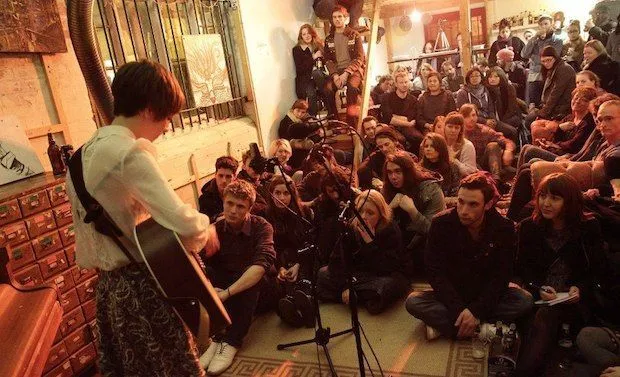
Photo: intimate underground music venue concert small stage crowd, via i.pinimg.com
There's a certain kind of magic that only happens when a performer is close enough that you can see the sweat on their brow. No Jumbotron. No pyrotechnics. Just raw talent, a decent sound system, and maybe 200 people crammed into a room that smells like spilled beer and ambition. That magic — the kind that used to live exclusively in the underground — is making one of the most compelling comebacks in modern entertainment culture.
And honestly? We're here for every second of it.
The Venue That Launched a Thousand Careers
Before The Weeknd was selling out SoFi Stadium, he was a ghost. Literally. Abel Tesfaye dropped mixtapes online, never showed his face, and performed in Toronto venues so small they barely had a stage. Before Billie Eilish was a Grammy-collecting machine, she was playing The Troubadour in West Hollywood — a venue that seats fewer than 500 people — and absolutely destroying it.
These aren't just fun origin stories. They're a blueprint.
The intimate venue — what we at Kadobars Officials lovingly call the "kadobar" of the music world — has always been the true testing ground for greatness. It's where charisma either shows up or it doesn't. You can't hide behind production value when you're three feet from your audience. Either you've got it, or you go home.
Venue owners across the country have watched this dynamic play out for decades. "We've had artists come through who were nervous wrecks before soundcheck, then walk out and own the room like they were born for it," says one longtime club manager in Nashville who's hosted everyone from emerging country acts to surprise hip-hop drop-ins. "This space breaks people open. The good ones, it makes them."
Why the A-List Is Coming Back Down to Earth
Here's where things get genuinely fascinating. It's not just rising artists who are gravitating toward smaller stages — established superstars are actively seeking them out. And the reasons are more layered than you might expect.
Post-pandemic, something shifted in the cultural conversation around authenticity. Fans started craving connection over spectacle. Social media, for all its chaos, made people hunger for the real thing — a moment that couldn't be recreated by an algorithm. And megastars, perhaps surprisingly, felt that hunger too.
Harry Styles famously popped up at a tiny Chicago venue during a break in his Love on Tour run, playing an impromptu set that sent the internet into a full meltdown. Beyoncé, queen of the grand gesture, has long used intimate industry showcases to debut new material in front of tight-knit audiences before going full Beyoncé on the world stage. Even hip-hop heavyweights like Kendrick Lamar have been spotted at underground showcases, not just as observers but as participants.
The appeal? Control, intimacy, and the kind of feedback loop that a stadium simply cannot offer.
"When you're playing a 200-cap room, you feel the audience breathe," explains one touring musician who's performed at both Madison Square Garden and a bar in Austin, Texas that holds maybe 150 people. "You adjust in real time. It's a conversation. At an arena, you're delivering a presentation."
The Social Media Effect: When Intimate Goes Viral
There's a delicious irony at play here. The very platforms that have made massive celebrity culture so dominant are also the ones amplifying the magic of small-venue moments. A surprise set at a Brooklyn loft party can rack up 10 million views overnight. A stripped-down acoustic performance at a Chicago jazz club gets clipped, shared, and dissected by music fans in ways that a Super Bowl halftime show — despite its billion-dollar production — sometimes can't match.
For artists, this creates a powerful incentive. One authentic moment in a kadobar-style space can do more for your brand than a month of press runs. It signals something to fans: I haven't forgotten where this comes from. I haven't forgotten you.
Venue owners are noticing the uptick in celebrity interest, too — and navigating the new reality that comes with it. "We had a pretty well-known artist want to do a surprise show here last year," says one venue operator in Los Angeles. "The challenge isn't the show itself. It's keeping it quiet long enough that the room doesn't get overwhelmed before doors even open."
The Cultural Ecosystem That Makes It All Work
What's easy to overlook in this conversation is that intimate venues aren't just launching pads or nostalgic playgrounds for famous people. They are living, breathing ecosystems that sustain entire local music cultures. The bartenders who become talent scouts. The regulars who become superfans. The opening acts who become headliners.
Cities like New York, Los Angeles, Nashville, Chicago, Atlanta, and Austin have always understood this. But the kadobar culture is spreading. Smaller markets — think Kansas City, Denver, New Orleans, and even some mid-sized college towns — are developing their own scenes with the same DNA: low cover charges, high talent density, and a community energy that money genuinely cannot manufacture.
For fans, that's the real gift. You don't need a $400 ticket to witness something legendary. Sometimes you just need to know where to look.
What This Means for the Future of Live Music
Industry analysts have started paying attention. Booking agencies are increasingly building "intimate showcase" legs into major tour cycles. Record labels are using small venue performances as content goldmines — live session videos, behind-the-scenes footage, fan interaction moments that feed the content beast while simultaneously reinforcing an artist's credibility.
But beyond the business mechanics, there's something more human happening. In an era of digital saturation, people want to feel something real. They want to stand in a room with a performer and know — truly know — that this moment is unrepeatable.
That's what kadobar culture has always offered. And right now, the whole world is finally catching up to what the underground has known all along.
Next time you see a show announcement for a 300-cap venue from an artist you've only heard on the radio? Don't sleep on it. Buy the ticket. Show up early. Because the most important moments in music history have a funny habit of happening in the smallest rooms.